

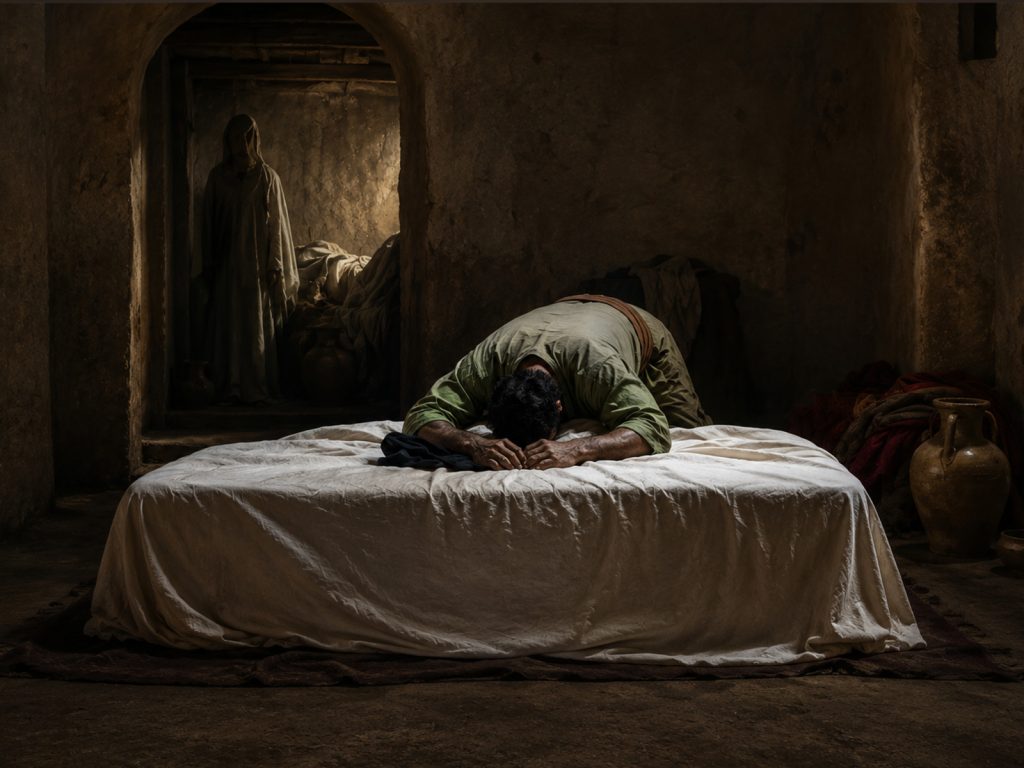

…How beautiful it is to listen with the ear of the heart to a portion of the qualities of that Noble One, as described by his closest supporter, his intimate companion, and the keeper of his secrets—the Commander of the Faithful (peace be upon him)—and to respond to the call of the Commander of the Faithful in following the pure being of the Noble Prophet (peace be upon him and his family)…
“So follow your pure and purified Prophet, for he is most worthy of being followed by whoever seeks to follow, and his patience is the model for whoever strives to be patient. The most beloved of servants in the sight of Allah is the one who follows his Prophet and walks in his footsteps. He would take from the world only a morsel that barely passed around his teeth—meaning that he did not take from this world more than necessity compelled him to use—and he never cast even a glance of desire toward it, for he set no attachment upon it…”
The world was offered to him, yet he refused to accept it. And when he knew that Allah despised a thing, he too despised it; whatever Allah regarded as base, he considered base; and whatever Allah deemed insignificant, he held as insignificant…
The Prophet (peace be upon him and his family) would eat his food upon the ground, and he would sit as a servant sits. With his own hand he would mend his footwear, and he would patch his own garment…
Thus he turned his heart away from the world, banished its remembrance from his mind, and wished that the adornments of this world remain hidden from him so that he would not take from them a fine robe. He did not regard the world as enduring, nor did he hope to linger in it. Hence he cast off his attachment to it, withdrew his heart from it, and averted his gaze from it.
Surely Allah made Muḥammad (peace be upon him and his family) a sign for the Resurrection—since no prophet will be sent after him—a bearer of glad tidings of Paradise and a warner against punishment. He departed from this world without ever having filled himself with its bounties or indulged in its delights, and he entered the Hereafter carrying no sin with him…
How great, then, is the favor that Allah has bestowed upon us, and what a blessing He has granted us: a leader whom we must follow, and a guide whose footsteps we must place our own upon…[1]
And how heartrending is the whisper of the Commander of the Faithful (peace be upon him) to his Beloved and Guide, when he was washing his pure body:
“May my father and mother be ransomed for you, O Messenger of Allah. Surely with your death a cord has been severed of prophethood, of divine ordinances, and of heavenly tidings—such as was not severed with the death of others…”
“Had you not enjoined patience and forbidden lamentation, crying out, and wailing, truly we would have drained the springs of our tears by excessive weeping at your separation; pain and sorrow would have been continuous, and grief and lament everlasting. Even the drying up of tears and the permanence of sorrow would not suffice in your affliction — yet death is a reality that cannot be undone nor averted.”
“May my parents be ransomed for you; remember us before your Lord and keep us in your
remembrance.”[2]
Tags: Asceticism in this world and desire in the hereafter – passing
Footnotes:
[1] Excerpts from Sermon 160, Nahj al-Balāghah
[2] Nahj al-Balāghah, excerpt from Sermon 235