
Imam Reza (PBUH)

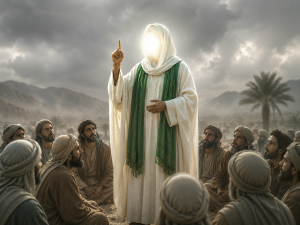
The Scholar of the Progeny of Muhammad

“My children! Your brother, Ali ibn Musa (peace be upon him), is the Scholar of the Household of Muhammad (peace be upon them). Learn the teachings and principles of your religion from him and preserve his words. I have repeatedly

Read more..

A Reliable Support

Regarding the meaning of tawakkul (trust in God), a person asked Imam Ali ibn Musa al-Ridha (peace be upon him): “What is the limit of tawakkul?” He replied: “It is to rely on God and fear no one.”[1] Various verses

Read more..

Nobel Servants of Allah

Imam Reza (PBUH) described the noble servants of Allah (SWT) as those who rejoice in doing good, repent quickly after sinning, thank Allah for His blessings, show patience in hardship, and forgive when angered. Living by these virtues, one earns closeness to Allah and becomes among His noble servants.

Read more..

Fluent in Every Language

Imam Reza (PBUH) could speak every language and dialect fluently, a divine gift showing his universal connection with all people. Historical narrations describe how he responded in each person’s native tongue. As Allah’s representative, he emphasized that no leader is appointed without being understood, reflecting divine wisdom and compassion for humanity.

Read more..

The Last Hours

Imam Reza (peace be upon him) was under immense pressure and constant harassment during his time as the crown prince under Mamun. The situation had become so difficult for him that he would pray: “O Allah, if my deliverance from

Read more..

The Stranger of Tus

“Dabbal Khazai”[1] made his way to the city of Merv[2] and went to Imam Reza (peace be upon him). With great enthusiasm, he said to the Imam (peace be upon him), “O son of the Messenger of God (peace be

Read more..

The Habit of Kindness

Imam Reza (PBUH), like his noble ancestors, embodied **forgiveness and mercy** even toward his enemies.
When Ma’mun imprisoned Jaloudi—the man who had once looted and insulted the Imam’s home—Imam Reza (PBUH) still pleaded for his freedom. Despite Jaloudi’s cruelty, the Imam chose compassion over vengeance, proving that true Islamic leadership rests upon mercy, not retaliation.

Read more..

Unforgettable Advice

Imam Reza (PBUH) narrated a story where Allah (SWT) ordered a prophet to **eat, hide, accept, and flee** from certain things.
Each symbolized a moral: the **mountain** represented anger to be controlled, the **gold** a good deed to be hidden, the **bird** sincere advice to accept, and the **corpse** gossip to avoid.

Read more..

Neatness

Imam Reza (PBUH) emphasized both **spiritual and material neatness** as means of attracting others and showing respect.
He encouraged cleanliness, perfume, and moderation while avoiding extravagance.
At home, he dressed simply, but in public, he appeared neat and adorned — teaching that **neatness is a social duty and a sign of faith.**

Read more..

Sunshine of Kindness

This passage beautifully illustrates Imam Reza’s (PBUH) **gentle character, humility, and social justice**.
He never insulted anyone, spoke kindly, and treated all — including servants — as equals.
His actions showed that **true nobility lies in piety and good deeds**, not in status or power, embodying Islam’s purest morality.

Read more..

A Big Claim

True Shi’ism, as Imam Reza (PBUH) explained, is not just loving Ahl al-Bayt (PBUT) but obeying Allah (SWT) and following their example in deeds and faith. Only those whose actions mirror their teachings are true followers. Sincere repentance, humility, and devotion earn divine mercy and closeness to the Ahl al-Bayt (PBUT).

Read more..

Worry, why?

He had read the verse many times, but he couldn’t fully grasp its meaning. He repeatedly pondered over it in his mind: “And whoever relies upon Allah – then He is sufficient for him.” [1] What exactly is God’s message

Read more..

The Confession of Superiority

This passage recounts how even Ma’mun, the Abbasid caliph and political adversary of **Imam Reza (PBUH)**, was compelled to acknowledge the Imam’s unmatched piety, wisdom, and virtue. Though Ma’mun’s motives were political, his words became a lasting testimony to the Imam’s spiritual and moral superiority — a truth so evident that even his enemy could not deny it.

Read more..

Seeing Allah (SWT)

This narration highlights Imam Reza’s (PBUH) firm reasoning in clarifying *Tawheed* (monotheism). When Abu Qurrah claimed that Prophet Muhammad (PBUH&HP) saw Allah, the Imam explained that Allah cannot be seen or comprehended—He is beyond physical perception. The Prophet only witnessed Allah’s greatest signs, not Allah Himself, affirming God’s absolute transcendence and uniqueness.

Read more..

Difference in Miracles

This narration explains why Allah (SWT) gave each prophet miracles suited to their time. Imam Reza (PBUH) taught that Moses’ miracles countered magic, Jesus’ miracles addressed medical need, and Prophet Muhammad’s (PBUH&HP) miracle—the eloquent and timeless Qur’an—answered the intellectual age of poetry and reason, remaining an everlasting sign of divine wisdom.

Read more..

The Art of Generosity

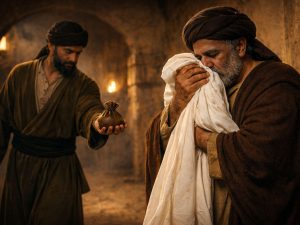
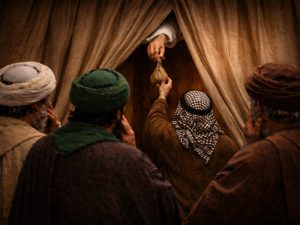
This story beautifully reflects Imam Reza’s (PBUH) humility and compassion. When a traveler in need sought help, the Imam discreetly gave him money from behind a door to protect his dignity. True generosity, as Imam Reza (PBUH) demonstrated, is not just in giving wealth—but in giving with kindness, respect, and humility.

Read more..

The Comfort of Both Worlds

Indeed, it is a difficult day. A day when no one cares for anyone else… When speaking of the Day of Judgment, the Qur’an describes it as a day that will be harsh and grievous for the inhabitants of both

Read more..

The Fortress of Heart

This narration from Imam Reza (PBUH) teaches that true safety lies in the “fortress” of faith — the declaration *“There is no God but Allah.”* Yet, the Imam adds that entry into this divine fortress requires belief in and obedience to the Imam as Allah’s appointed guide. This faith protects the heart and society spiritually.

Read more..