
Imam Kadhim (PBUH)

Position and Status for a Noble Purpose

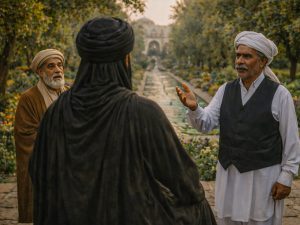
Ali ibn Yaqtin was a devoted follower and Shiite of Imam Kazim (peace be upon him). When the Umayyad dynasty collapsed and the Abbasid caliphate was established, he returned to Kufa with his wife and two children, and established a

Read more..

The rights of Animals

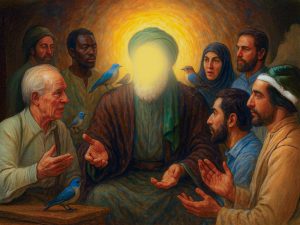
Imam Musa al-Kazim (PBUH) said: “Be mindful of God regarding those under your authority and the speechless ones (animals).” When asked about “speechless ones,” he replied, “Sheep, cats, doves, etc.” Islam emphasizes kindness, proper care, and fairness toward animals, forbidding cruelty and neglecting their basic needs.

Read more..

“The Beloved Amongst People”

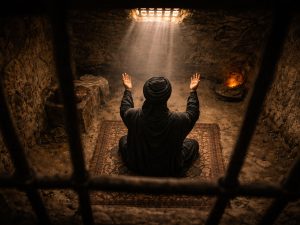
Imam Musa al-Kadhim (PBUH), known for his piety, generosity, patience, and vast knowledge, was praised even by Sunni scholars. His humility and worship earned him the title “the righteous servant.” Despite his virtues, Caliph Harun al-Rashid imprisoned and poisoned him out of fear of his spiritual influence over people.

Read more..

Altruism

Altruism, which is one of the noble human inclinations, must be nurtured and supported through proper education and guidance to be fully realized. If the day comes when all the people on earth embrace certain principles, despite their differences in

Read more..

The Final Word

One of the attributes possessed by the Ahl al-Bayt (peace be upon them) is “Fasl al-Khitab.” The phrase “Fasl al-Khitab” is a term from literary terminology that means a decisive statement, one that separates truth from falsehood and ends disputes.

Read more..

The Manner of Criticism

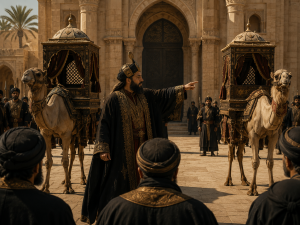
Harun al-Rashid, fearing Imam Musa al-Kadhim’s (PBUH) influence, deceitfully entered Medina under the pretext of Hajj, publicly declaring his intent to imprison the Imam. Arrested during prayer, Imam was moved between harsh prisons until Harun ordered Sindi bin Shahak to poison him, leading to the Imam’s martyrdom in Baghdad.

Read more..

The Conspiracy of the Caliph

Harun al-Rashid, fearing Imam Musa al-Kadhim’s (PBUH) influence, deceitfully entered Medina under the pretext of Hajj, publicly declaring his intent to imprison the Imam. Arrested during prayer, Imam was moved between harsh prisons until Harun ordered Sindi bin Shahak to poison him, leading to the Imam’s martyrdom in Baghdad.

Read more..

The Most Knowledgeable Person

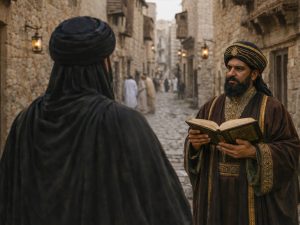
Imam Musa al-Kadhim (PBUH) explained that an Imam is recognized by divine appointment, knowledge of all languages, awareness of hidden intentions, and foretelling future events. To demonstrate, he spoke flawless Persian to a visitor from Khorasan, proving his divine knowledge and that a true Imam comprehends all beings and languages.

Read more..

A Two-Way Relationship

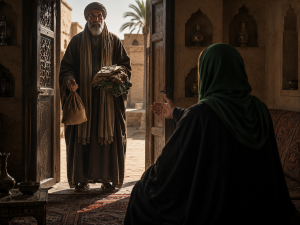
After Imam Sadiq’s (PBUH) martyrdom, confusion spread among Shiites about his successor. Delegates from Neyshabur brought Khums and written questions to Medina, testing who the true Imam was. **Imam Musa al-Kadhim (PBUH)** miraculously answered the sealed questions, honored Shatitah’s small offering, and foretold her death, confirming his divine Imamate and knowledge.

Read more..

Let’s not Judge Early!

During his Hajj journey, **Shaqiq Balkhi** met a humble, radiant young man who miraculously read his thoughts and quoted Qur’anic verses teaching repentance and avoiding suspicion. Later, in Mecca, Shaqiq discovered the man was **Imam Musa al-Kadhim (PBUH)**. The encounter revealed the Imam’s divine insight and lesson against judging others.

Read more..

The Heir of Knowledge

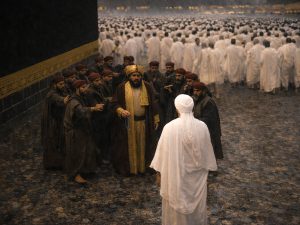
During Hajj, Caliph Harun al-Rashid arrogantly performed rituals until **Imam Musa al-Kadhim (PBUH)** reminded him of equality before Allah. When questioned, the Imam brilliantly explained Islam’s core duties through symbolic numbers, astonishing Harun. Realizing his wisdom, Harun declared him the true descendant of the Prophet—the blessed fruit of Prophethood.

Read more..

I am Guilty of Being Free…

Like Prophet Joseph, **Imam Musa al-Kadhim (PBUH)** was imprisoned for his truth and faith, not for any wrongdoing. His suffering symbolized spiritual strength and purification. The Imam taught that **truth never leads to destruction but is salvation**, while falsehood brings ruin. Ultimately, he was martyred in prison, embodying patience and freedom.

Read more..

“After a Sign”

Aba Basir asked **Imam Musa ibn Ja‘far (PBUH)** how an Imam can be recognized. The Imam explained four signs: appointment by the previous Imam, answering all questions and speaking without being asked, knowledge of the future, and understanding every language. He then demonstrated this miracle, proving divine appointment and perfect knowledge.

Read more..

The Descendants of the Messenger of Allah

Imam Musa al-Kadhim (PBUH) taught kindness, honesty, and justice as keys to divine mercy. When Caliph Harun questioned why the Imams were called the Prophet’s progeny, Imam proved through Qur’anic verses—especially about Jesus and the verse of Mubahilah—that descent can be through the mother, affirming Ahl al-Bayt’s lineage from Prophet Muhammad (PBUH&HP).

Read more..

Ascension from the Loneliness of Jail

During Caliph Mahdi Abbasi’s visit to Medina, he questioned **Imam Musa al-Kadhim (PBUH)** about whether the **Quran explicitly forbids wine**. The Imam explained that the word *“Ithm”* (sin) in Surah Al-A‘raf refers to wine, as confirmed by Surah Al-Baqarah. Thus, the Quran clearly prohibits it. Mahdi was astonished by the Imam’s precise reasoning.

Read more..

The Real Commentator of Quran

During Caliph Mahdi Abbasi’s visit to Medina, he questioned **Imam Musa al-Kadhim (PBUH)** about whether the **Quran explicitly forbids wine**. The Imam explained that the word *“Ithm”* (sin) in Surah Al-A‘raf refers to wine, as confirmed by Surah Al-Baqarah. Thus, the Quran clearly prohibits it. Mahdi was astonished by the Imam’s precise reasoning.

Read more..

Fulfilling Promises to Children

“He’s a child! He forgets quickly.”“We’ll distract him.”“I just said that to calm him down; we’ll think of something later.”“Is it wrong to lie to a child?” These are sentences exchanged between some fathers and mothers, especially when their child

Read more..

Endeavor and Diligence

Islam encourages hard work and rejects laziness, viewing effort as part of worship. The Prophet (PBUH&HP) said nine-tenths of worship is striving for lawful sustenance. Imam Musa al-Kadhim (PBUH) personally labored in his fields, teaching that all, even the honorable, must work diligently for independence and to support their families.

Read more..

Brine Water

The Quran and Imam Musa al-Kadhim (PBUH) warn against attachment to worldly desires. The Imam compared this world to **salty sea water**—the more one drinks, the thirstier he becomes until it destroys him. True purity comes from detaching from material greed and focusing the soul toward **Allah (SWT)**.

Read more..

Planning

How can I live a purposeful life? How can I make the best use of this limited world? What activities should I include in my time management plan? Many of us regret not having a clear plan or routine in

Read more..