


Allah Almighty had informed all His prophets of the attributes of the Seal of the Prophets: his place of birth, his place of residence, the signs of the time of his mission and migration, the marks upon his body, the qualities of his conduct, the distinctions of his law, and so forth. The Exalted Lord commanded His prophets to convey all of these attributes to their communities, and to take from their peoples a covenant that, whenever the prophet possessing those characteristics and qualities should be sent forth, they would believe in him.
These teachings had remained preserved in the heavenly scriptures, unaltered and untouched by distortion, and they were in the possession of the scholars of the Jews and the Christians. (Indeed, even today, some of these matters are still to be found in certain books of the religions…) Wherever the scholars of the Jews and the Christians resided, they would recount and expound upon these reports in the fullest detail.
Among these reports was that the Jewish scholars had spread the news in Medina, declaring that the Prophet would migrate to that very city. For this reason, when the people of Medina encountered the Prophet in Mecca, they recognized that he was the very messenger of whom the Jews had spoken, and thus they believed in him…
A few years before the advent of Islam, a Jewish man from Syria named Ibn Ḥayyabān traveled to Medina. Those who had seen him spoke of his virtues, saying: “Whenever we were afflicted by drought and in need of rain, we would turn to him and ask him to supplicate for rainfall. He would pray, and clouds would appear in the sky and pour down upon us. This event occurred many times. For this reason, Ibn Ḥayyabān held great esteem and influence among the Jews of Medina.”
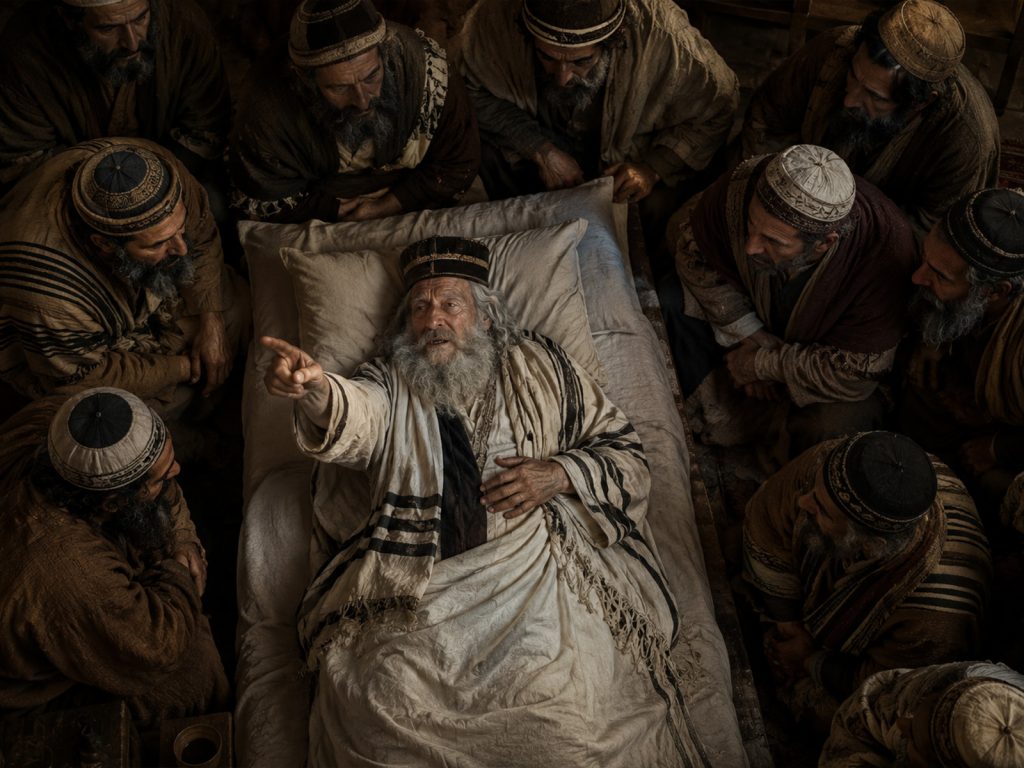
One day they learned that Ibn Ḥayyabān was passing through the final hours of his life. The Jews gathered around him, and he said to them: “O Jews, do you suppose what it was that brought me from the prosperous and bountiful land of Syria to this poor country?”
They all replied: “You know best yourself!”
Ibn Ḥayyabān said: “I came here from Syria awaiting the prophet whose mission is near at hand, for this city is the place of his migration. I had hoped to meet him and follow him. But alas, with my death this hope perishes. If you hear his name or receive news of him, do not allow anyone to precede you in believing in him…”
Ibn Ḥayyabān completed his counsel and then surrendered his soul to the Creator of souls.
On the morning when Banū Qurayẓah—a tribe of the Jews of Medina—were overcome, three young Jews named Thaʿlabah, Asīd, and Asad, who were still in the early years of youth and not yet deeply ingrained in the customs and traditions, recalled the words and counsels of Ibn Ḥayyabān. They said to their people: “By God, this man is the very prophet Ibn Ḥayyabān described to us. So fear God, and follow him.”
The Jews replied: “No, this man is not him.”
The three youths insisted once more, saying: “Yes, by Allah, this man is indeed he.”
Thereupon they descended from their fortress and citadel, joined the army of Islam, and embraced the faith of Islam.
“Taken from the book The Role of the Imams in Reviving Religion, authored by ʿAllāmah Sayyid Murtadā ʿAskarī (with slight adaptation)”
Tags: Covenant – Descriptions of the Noble Prophet (peace be upon him) in Previous Religions – Jewish Hostility – Obstinacy – time of mission