
Imam Hussain (PBUH)

“Love Means Hussain (PBUH)… “

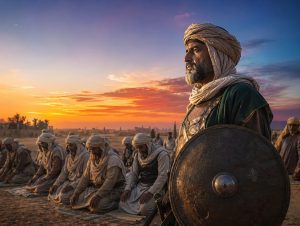
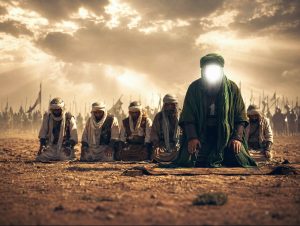
Imam Hussain (PBUH) faced martyrdom with unwavering faith, detachment from the world, and devotion to Allah. Even in thirst and pain, he prayed, remembered God, and remained patient. His worship inspired enemies to convert. His courage and serenity in Karbala made angels marvel. Truly, he embodied divine submission and spiritual strength.
Read more..

The Angel of Purity

“O people! The Messenger of Allah said: Whoever sees a tyrannical ruler who has made what is forbidden by Allah lawful, who breaks the covenant of Allah, who goes against the Sunnah and laws of the Messenger of Allah, and

Read more..

Performing a Divine Duty

Imam Hussain (PBUH) rose against Yazid’s corrupt rule as a religious and moral duty. He sought to revive the Prophet’s tradition, enjoin good, and forbid evil. His refusal to pledge allegiance stemmed from Yazid’s immorality and injustice. His uprising was a model of divine responsibility and resistance to oppression.

Read more..

Two Windows, One Departure

Imam Hussain (PBUH) invited Obaidullah and Zuheir to support his cause. Obaidullah declined, clinging to worldly comfort, while Zuheir, after hesitation and encouragement from his wife, accepted. He joined Imam Hussain (PBUH) and heroically defended him in Karbala, embodying the transformation from reluctance to sacrifice for truth.

Read more..

Self-Sacrifice for Saving Others

Imam Hussain (PBUH) rose solely for Allah, rejecting power and seeking to guide people from misguidance. Unlike Ibn Zubair, who pursued political rule, Hussain sacrificed everything to uphold truth and enjoin good. His martyrdom remains a symbol of selfless devotion, inspiring believers to resist oppression and follow divine principles.

Read more..

The Message of Devotion

Imam Hussain’s (PBUH) uprising against Yazid was purely for Allah’s pleasure, not for power. Despite knowing martyrdom awaited him, he stood to revive his grandfather’s religion and oppose tyranny. His movement was a divine duty to enjoin good and forbid evil, even amid fear, betrayal, and overwhelming oppression.

Read more..

The Saddle Overturned, the Sun Drowned in Blood

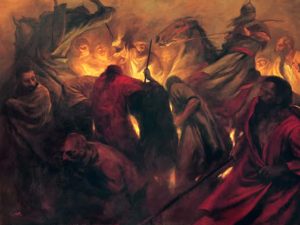
Imam Hussain (PBUH) calls upon his followers to remember his tragic martyrdom, especially his infant’s denied thirst. Imam Mahdi (A.J.) mourns him in Ziarat Nahiya, recounting his virtues, resistance against injustice, and ultimate sacrifice. Despite betrayal and brutal oppression, Imam Hussain stood firm, defending faith, truth, and his family’s honor.

Read more..

In Remembrance of the Most Beautiful Rose

On Arba’een, the 40th day after Imam Hussain’s (PBUH) martyrdom, believers commemorate his sacrifice. Jabir ibn Abdullah al-Ansari, the first pilgrim to his grave, expressed deep love and sorrow. Imam Sadiq (PBUH), in Ziarat Arba’een, honors Hussain’s mission: sacrificing his life to save humanity from ignorance and misguidance.

Read more..

A Prostration on Soil, An Ascend Into the Heavens

Imam Hussain (PBUH), the master of dignity, chose death over humiliation in Karbala. As he lay wounded and alone, he performed a unique prostration—on his face—utterly submitted to Allah. His martyrdom marked the peak of spiritual freedom. His head raised on a spear symbolized eternal defiance against tyranny and injustice.

Read more..

On Salam

Islam emphasizes peace through the greeting **Salam**, meaning “peace be upon you.” Imam Hussain (PBUH) taught that Salam must precede speech and called withholding it an act of miserliness. He said saying Salam first brings 69 of 70 blessings, reflecting Islam’s message of brotherhood, respect, and comprehensive well-being for others.

Read more..

The Quranic Argument

After the Prophet’s (PBUH\&HP) passing, public reference to Quranic verses about Ahl al-Bayt (PBUT) was suppressed. Imam Hussain (PBUH) boldly addressed these truths in a sermon when pressured by Muawiyah’s court. Citing verses and warning against Satan’s path, he affirmed his divine status, leaving opponents silenced and exposed.

Read more..

The Grandchild of the Prophet

The famous hadith “Hussein is from me, and I am from Hussein” shows the deep spiritual and divine bond between Prophet Muhammad (PBUH) and Imam Hussein (PBUH). Recognized by both Sunni and Shia sources, it affirms Hussein’s high status and connects love for him with love for the Prophet and Allah.

Read more..

A Strange Commencement

On the 3rd of Sha’ban, Imam Hussain (PBUH) was born—a moment of both joy and sorrow for Prophet Muhammad (PBUH&HP), who foresaw his grandson’s tragic martyrdom. Named by divine command, Hussain’s first words were “Allahu Akbar.” His life embodied devotion, and in death, he surrendered with complete faith and love.

Read more..

Authorization to Sin

A sinful man sought advice from Imam Hussain (PBUH). The Imam told him he could sin freely—if he could stop receiving Allah’s sustenance, leave His domain, hide from His sight, escape death, and avoid Hell. This powerful wisdom awakened the man, showing the impossibility of sin in God’s all-encompassing presence.

Read more..

Wise Answers

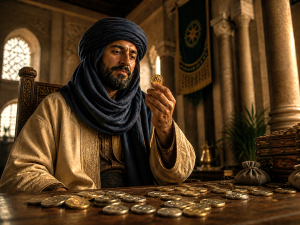
A Bedouin burdened by debt asked Imam Hussain (PBUH) for help. The Imam posed three questions, rewarding the man for each wise answer. After answering all, the Imam gifted him gold and a valuable ring. The man praised Allah for choosing such a noble family for Prophethood, deeply moved by Hussain’s wisdom and generosity.

Read more..

Beneficence as much as Knowledge

A Bedouin, overwhelmed by debt, sought help from Imam Hussain (PBUH), trusting in the Ahl al-Bayt’s generosity. After answering the Imam’s thoughtful questions wisely, the man received gold and a valuable ring. Deeply moved, he praised the divine wisdom in placing Prophethood within the noble family of the Prophet (PBUH\&HP).

Read more..

Rain of Kindness

A traveler in Medina sought the most generous man and was directed to Imam Hussain (PBUH). After praising him in poetry, the Imam gave him 4,000 dinars wrapped in his own cloak, expressing regret it wasn’t more. Deeply moved, the man wept—not from the gift’s size, but from the Imam’s nobility.

Read more..

Grand, but Humble

Imam Hussain (PBUH) embodied a rare balance of revolutionary spirit and deep humility. Despite his honor and status, he lived modestly, walking to Hajj, serving the poor, and sitting with the needy. His humbleness reflected divine values, earning him unmatched respect. He is a timeless role model of true leadership.

Read more..

The Position of Quran Teachers

Imam Hussain (PBUH) rewarded a Quran teacher generously for teaching his child Surah al-Hamd, giving gold, fine cloths, and jewels. He emphasized that the teacher’s gift of Quranic knowledge outweighed any material reward. His action highlighted the immense value of teaching the Quran and encouraged generosity and spiritual preparation.

Read more..

A Measure for Balance

Imam Hassan and Imam Hussain (PBUT) inherited the Prophet’s (PBUH\&HP) spiritual, moral, and intellectual perfections. His deep affection toward them reflected divine insight, not mere emotion. As rightful leaders, their roles were divinely guided. Visiting Imam Hussain (PBUH), especially, holds unmatched rewards due to his sacrifice that preserved Islam’s essence.

Read more..