Imam Ali (PBUH)

Ali (Peace be Upon Him) and the Grand Order of Allah

Imam Ali (PBUH), the first Muslim and born in the Ka’ba, exemplified devotion to Salat. His deep spiritual focus made him unaware of physical pain during prayer. He emphasized Salat’s central role in Islam through his words, actions, and final will, calling it the pillar of religion and the path to nearness to God.


Read more..

The Shia of Amir al-Mu’minin (PBUH) and a Historical Oppression

Shia Muslims follow Imam Ali (PBUH) and the twelve Imams after Prophet Muhammad (PBUH&HP). Despite their piety and loyalty, they faced severe persecution, economic exclusion, and distortion of truth by rulers like Muawiyah. Yet, with steadfast faith, they upheld justice and endured hardships, preserving Islam’s true essence through sacrifice and devotion.

Read more..

The Principle of Oath Keeping

Oath keeping is a core Islamic virtue upheld by the Quran and Ahl al-Bayt (PBUT), applying even to non-Muslims. Imam Ali’s (PBUH) letter to Malik Ashtar highlights the importance of honoring promises as a divine trust. Betrayal brings grave consequences, while loyalty upholds justice and earns divine reward.

Read more..

A Justice-Promoting State

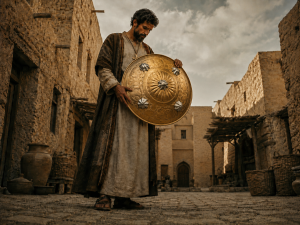
Imam Ali (PBUH), upon finding his lost armor with a Christian, took the matter to court. Lacking a witness, the judge ruled in favor of the Christian. Witnessing Ali’s justice and humility, the man was deeply moved, returned the armor, embraced Islam, and later fought alongside Ali in battle.

Read more..

Criteria for Selection

Imam Ali (PBUH) emphasizes wise decision-making, especially when choosing partners, friends, or deputies. He advises testing individuals’ honesty and integrity, warning against those who fake virtue for personal gain. Trust should be based on proven character and past reputation, ensuring loyalty, truthfulness, and competence in both personal and public responsibilities.

Read more..

A Kind Father

As Amir al-Mu’minin Ali (PBUH) lay in his final moments after being struck, Asbagh ibn Nubatah visited him. Imam Ali shared a final hadith from the Prophet (PBUH&HP), affirming their joint spiritual fatherhood over the nation. His wisdom and compassion endured until his final breath, marking a deeply emotional farewell.

Read more..

Who is Right?

During the Battle of Jamal, a companion questioned how respected figures like Aisha, Talha, and Zubair could be on the wrong side. Imam Ali (PBUH) clarified: truth is not known through people, but people through truth. This principle defines Shiism—truth stands above personalities, even revered ones.

Read more..

Ali and his Attitude to Adversaries

Imam Ali (PBUH) showed unmatched patience and justice in dealing with opposition. He refused to force allegiance, tolerated public dissent, and upheld rights even for his critics. His humane approach, rooted in mercy and justice, reflected true Islamic leadership, distinguishing him from typical rulers who used force against dissent.

Read more..

How was He Like?

Amir al-Mu’minin Ali (PBUH) was a unique embodiment of justice, humility, wisdom, and deep piety. Though his virtues were often hidden by enemies and feared by friends, they radiated through history. Even his adversary Mu’awiyah wept upon hearing of Ali’s unmatched character, devotion, and detachment from worldly desires.

Read more..

The Secret of Amity and Animosity

Shiism is the school of love, and Imam Ali (PBUH) is its living embodiment—both attracting deep devotion and fierce opposition. His divine connection, truthfulness, and moral integrity inspire timeless love. Unlike worldly heroes, Ali’s (PBUH) spiritual essence resonates with human nature, making his love eternal in the hearts of truth-seekers.

Read more..

This is How We Became Orphans…

Imam Ali (PBUH), forewarned of his martyrdom by the Prophet (PBUH&HP), was struck with a poisoned sword during prayer in Ramadan. Showing mercy even to his killer, he passed away two days later, leaving behind a hidden legacy and a will for secret burial. His martyrdom shook Kufa, marking a historic loss.

Read more..

Ali (PBUH) as Ever Just and Trustworthy!

Imam Ali (PBUH), the first Shia Imam, upheld justice by refusing his brother Aqil’s request for funds from the public treasury. Instead, he illustrated that misusing public wealth equals theft, regardless of status. His integrity and ethical leadership serve as a timeless model of justice and piety in governance.

Read more..

Amirul Momineen and Advice to the Apple of His Eyes

In his final will, Imam Ali (PBUH) urges his family and followers to fear God, uphold truth, support justice, care for orphans and neighbors, preserve prayer and the Qur’an, honor the Kaaba, and remain united. He warns against neglecting moral duties and limits blame for his death to his killer alone.

Read more..

Amir al-Mu’minin School

Islam emphasizes keeping promises as a core aspect of faith, extending even to enemies. In his letter to Malik Ashtar, Imam Ali (PBUH) warns against breaking treaties, urging absolute honesty and clarity. He teaches that honoring agreements reflects divine duty, earning Allah’s blessings and preventing both worldly harm and eternal punishment.

Read more..

Economic Justice

When Imam Ali (PBUH) became caliph, he confronted deep economic inequality caused by previous rulers’ unequal wealth distribution. Unlike them, he restored justice by returning public wealth to the treasury and ensuring equal distribution. Despite elite resistance and wars, his just governance eradicated poverty and restored fairness in Islamic society.

Read more..

Alignment of speech and action

Imam Ali (PBUH) exemplified deep compassion for orphans through both words and actions. He urged just treatment and personal care for them, once feeding hungry children and making them laugh to ease their sorrow. His teachings emphasized treating orphans like one’s own children and educating them with love and dignity.

Read more..

A Fascinating Role Model

Imam Ali’s (PBUH) life exemplified piety, justice, and self-sacrifice. Despite his leadership, he lived simply, upheld truth over popularity, and strictly followed divine laws. Loved and envied, he remained devoted to helping the poor and overseeing his officials’ conduct. His life offers a timeless model of godly leadership and devotion.

Read more..

A Different Motivation

Imam Ali (PBUH) began from poverty, yet through faith and effort, became economically successful, using his wealth to support the needy. He built wells, farms, and institutions purely for Allah’s sake, never for personal gain. Even in hardship, he prioritized others’ needs, embodying true sacrifice and divine-centered economic justice.

Read more..

Ladder to Proximity

Worship, as taught by Imam Ali (PBUH), transcends fear or desire for reward—it is love and recognition of God’s worthiness. True worship reflects spiritual elevation and closeness to Allah (SWT). Imam Ali exemplified pure devotion, worshiping not for Heaven or fear of Hell, but for God’s inherent perfection and majesty.

Read more..

A mysterious attraction

Nahj al-Balaghah’s enduring appeal lies in its depth, eloquence, and universal themes. Imam Ali (PBUH) addresses justice for the oppressed, divine philosophy, leadership, ethics, and spiritual awakening. Its powerful language and timeless insights captivate all—scholars and seekers alike—making it a source of profound wisdom across generations and ideologies.

Read more..