
Great Prophet of Islam (PBUH)

Mercy pouring down like rain

The Prophet Muhammad (PBUH) is a mercy to all humanity, like rain falling on every land. But only those with open, receptive hearts truly benefit. Just as fertile soil absorbs rain and grows lush, only those who accept his guidance can flourish. His mercy remains — but it’s up to us to receive it.

Read more..

Forgiveness or Revenge?

The Prophet Muhammad (PBUH) conquered Mecca not with vengeance, but with mercy. Despite Abu Sufyan’s long-standing enmity, the Prophet forgave him and offered safety to all who remained in their homes. His noble character—marked by forgiveness, restraint, and compassion—drew hearts to Islam and prevented bloodshed. A true model of divine mercy.

Read more..

Prophet’s Appreciation

Prophet Muhammad (PBUH) embodied gratitude not just in words, but in lifelong action. He never forgot Halimah, his foster mother, honoring her even after rising to leadership. He also showed deep respect to Shaymā’, his foster sister, by spreading his cloak for her and gifting her generously. His life was a true example of thankfulness, humility, and loyalty.

Read more..

Grooming and appearance

Prophet Muhammad (PBUH) emphasized both inner purity and outer cleanliness as central elements of Islamic practice. He taught that cleanliness is not only a part of faith, but also a foundation of Islam. His guidance covers personal hygiene (like trimming nails, using miswak, wearing perfume) and public cleanliness (such as keeping homes and surroundings clean). Islam views purity as a path to Paradise.

Read more..

The Morality of Muhammad

This narration beautifully illustrates the noble character, humility, and wisdom of the Prophet Muhammad (PBUH). He balanced worship, family, and community, always showing kindness, fairness, and gentleness. His gatherings were inclusive, respectful, and focused on knowledge and remembrance of Allah. He is truly the best example to follow, as the Qur’an states.

Read more..

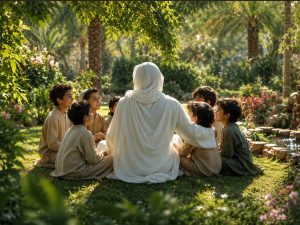
Bringing up Children

This narration beautifully illustrates the noble character, humility, and wisdom of the Prophet Muhammad (PBUH). He balanced worship, family, and community, always showing kindness, fairness, and gentleness. His gatherings were inclusive, respectful, and focused on knowledge and remembrance of Allah. He is truly the best example to follow, as the Qur’an states.

Read more..

The Power of Beneficence

The Prophet Muhammad (peace be upon him and his family) used the best methods of invitation and guidance to lead society, and that method was winning hearts. In his individual and social behaviors, he was a messenger of peace and

Read more..

True Following or False Claim

True following of Prophet Muhammad (PBUH) is not in name alone but in action—marked by hope in Allah, belief in the Hereafter, and constant remembrance of God. These traits distinguish real followers who shape their lives through faith, not desire. Islam calls us to live, not just label, the path of the Prophet.

Read more..

Conquering Hearts

The story of Adi bin Hatim is a powerful reminder that true leadership doesn’t need force—it needs character. He saw firsthand how the Prophet (PBUH) ruled not with a sword, but with humility, compassion, and wisdom. That alone turned a skeptical leader into a devoted believer. Islam spread through hearts before lands.

Read more..

An Opportunity for Reflection

This reflection on the Prophet Muhammad’s (PBUH) invitation to faith reveals a timeless truth: the heart of Islam’s spread was not conquest, but character. Whether through respectful letters to Christian kings, reasoned dialogue with Jews, or his forgiveness toward even staunch enemies like Safwan, the Prophet (PBUH) showed that compassion, patience, and moral integrity are more persuasive than force.

Read more..

The Key to Salvation

This inspiring story from the life of a companion of the Prophet (PBUH) reminds us that true strength lies in trusting God and making use of the abilities He has given us. With just a single piece of wisdom — “Whoever shows self-sufficiency, God will make him self-sufficient” — he transformed his life from hardship to dignity. A beautiful lesson in faith, effort, and divine provision.

Read more..

The Prophetic Forbearance

The Prophet Muhammad’s (PBUH) noble character—especially his forbearance—was so powerful that it led Zayd, a skeptic, to embrace Islam. Even when insulted, the Prophet responded with kindness, fulfilling a key attribute described in the Torah. His unmatched patience and generosity won hearts and spread faith.

Read more..

The Speed of Affection

The rapid spread of Islam is rooted in the unmatched character of Prophet Muhammad (PBUH). Despite facing hostility and lacking resources, his patience, justice, and leadership drew hearts to Islam. His personal kindness and firm stance on truth made him a unique and powerful force in human history.

Read more..

Longing in wait

The coming of Prophet Muhammad (PBUH) was foretold in previous scriptures. Scholars like Ibn Hayban moved to Medina in hopes of meeting him. After his passing, three young Jews recalled his words and recognized the Prophet (PBUH), embracing Islam. Their faith reflected the clear signs that matched earlier divine revelations.

Read more..

As Such Was He . . .

The Prophet Muhammad (PBUH) was the embodiment of balance, humility, and mercy—especially within his home and among his companions. He divided his time fairly between worship, family, and the needs of others. In gatherings, he never sought privilege, treated everyone equally, and avoided arrogance, useless talk, or fault-finding. His anger was only for the sake of God.

Read more..

The Prophet Muhammad’s counsel to Abu Dharr al-Ghifari

The Hadith of Abuzar is a powerful collection of the Prophet Muhammad’s (PBUH) advice, rich with timeless wisdom. He teaches Abuzar—and through him, all of us—to value five blessings before they fade: youth, health, wealth, time, and life. He warns of letting sin blind us, praises the one whose actions match their words, and calls us to seek true knowledge for the sake of God, not worldly gain.

Read more..